Gen Alpha shopping habits: why retail is moving back into stores
Gen Alpha shopping habits are giving retail a very interesting plot twist: the generation raised on screens is bringing fresh energy back into physical stores.
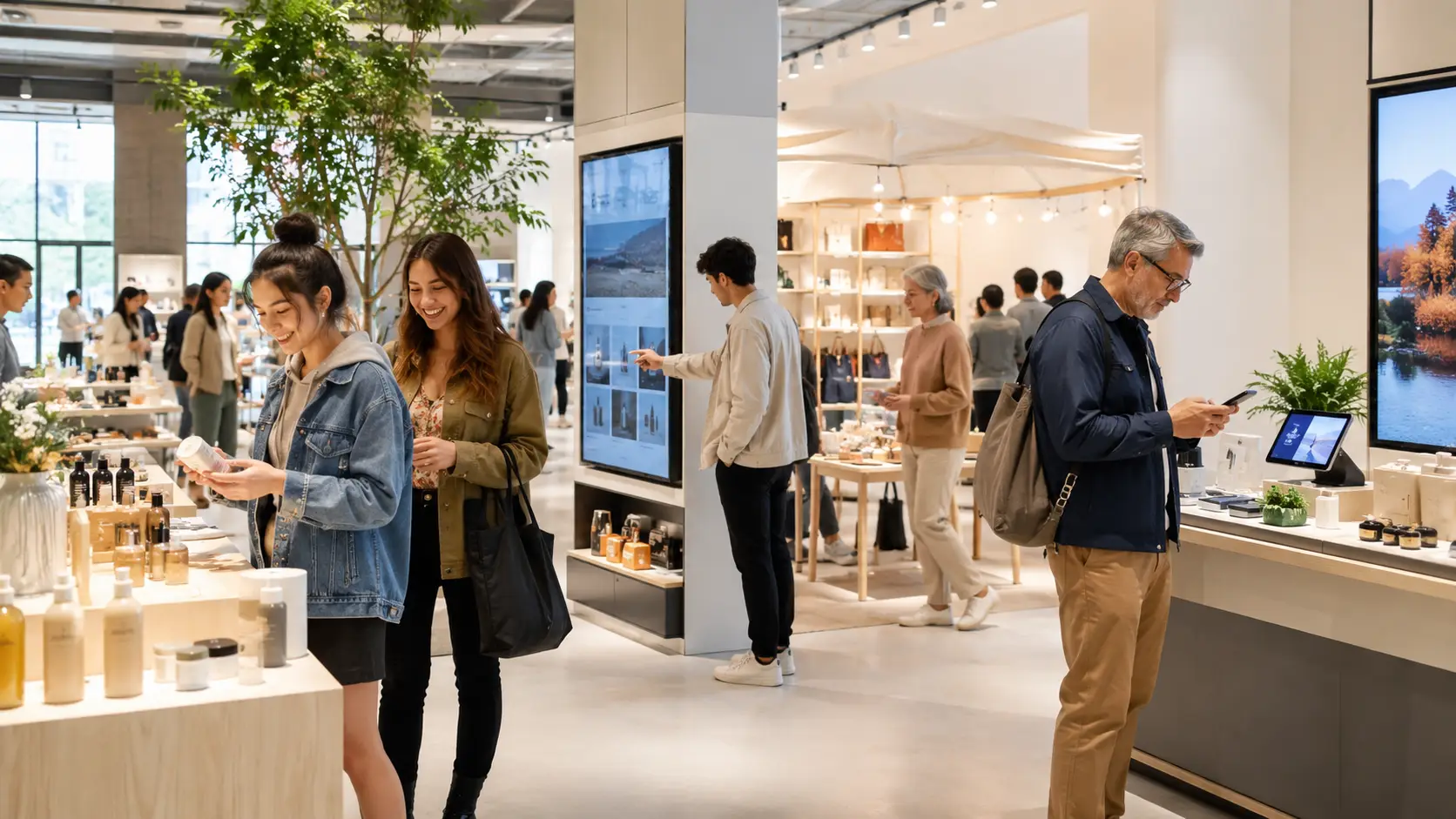
For years, retail has been told the same story: digital wins, physical fades and the future lives inside a checkout button. Then along comes Gen Alpha – the iPad-native, TikTok-raised, creator-led generation – and suddenly the story gets a whole lot more interesting.
Because the generation that grew up with digital everything is showing serious interest in something surprisingly old-school: going into stores.
Not because they missed the 2000s mall era. Not because they’re rejecting tech. Because physical retail gives them something online shopping can’t always deliver – social energy, instant discovery, sensory experience and the thrill of finding something in real life before it becomes another scroll-past product on a feed.
Welcome to the new retail paradox: the most digitally fluent generation may be the one forcing stores to become exciting again.
Gen Alpha shopping habits are rewriting the retail brief
Gen Alpha shopping habits are shaped by a world where product discovery rarely starts on a shelf. It starts in a TikTok haul, a YouTube short, a GRWM video, a Roblox collaboration, a creator recommendation or a message from a friend.
Then comes the twist: once the desire is created online, many younger shoppers still want to experience the product offline.
Beauty is a perfect example. A teenager may discover a lip oil, blush stick or fragrance mist online, watch ten creators review it, save it to a wishlist and then head into a store to see, test, compare and buy it. The store becomes the final episode of a story that started on a screen.
That is why Gen Alpha shopping habits matter so much for retailers. Physical stores can no longer sit outside the digital journey. They need to complete it.
A 2026 MG2 Advisory report found that 73% of Gen Alpha prefer shopping in-store because they want to fully immerse themselves in a brand’s environment. That tells us something important: Gen Alpha shopping habits are not anti-digital. They are physical and digital working together.
For brands, that shifts the entire retail brief. The question is no longer “How do we get people into store?” It is “How does our store complete the experience our digital channels started?”
Gen Alpha shopping habits show why online shoppers want something different
Gen Alpha shopping habits are fascinating because they sit alongside another shopper reality: older digital-first customers often feel underwhelmed by traditional retail.
Millennials and Gen X shoppers who have spent years building online-shopping habits are used to speed, searchability, reviews, filters, saved preferences, easy comparison and frictionless checkout. Online retail has trained them to expect control. Then they walk into a store with cluttered aisles, poor signage, limited stock visibility and queues that feel like a punishment for leaving the house.
That gap is where many retailers lose people.
A modern shopper does not only compare one store with another store. They compare the store with the smoothest digital experience they had that week.
Gen Alpha shopping habits raise the bar even further because younger shoppers expect the store to feel as intuitive, visual and discovery-led as the platforms where they first found the product. The physical experience has to feel worth the trip.
The Pew Research Center has reported that teens remain deeply connected to digital platforms, with YouTube and TikTok playing a major role in their daily media behaviour. That matters because Gen Alpha shopping habits are being formed in a content-first world where product discovery, peer influence and entertainment blur together.
Convenience alone belongs to digital. Physical retail needs to win through experience.
Gen Alpha shopping habits are pushing stores to become less cluttered and more clever
Gen Alpha shopping habits are one reason retailers are thinking carefully about how stores feel, not only how they function.
The most interesting retail moves right now are not about adding gimmicks. They are about rethinking how people feel inside a store. Target has announced major investment into stores, remodels, technology and guest experience, including a 2026 plan focused on elevated store experience, updated technology and changing customer expectations. Walmart has also announced more than 650 scheduled remodels for 2026, with a focus on speed, convenience and growth.
That tells us something important: even the giants are treating stores as strategic media spaces again.
Wider aisles may sound like a small operational detail, but it speaks to a much bigger shift. A store that feels crowded creates stress. A store that feels open creates ease. A store that is easier to navigate gives people space to browse, compare, film, discover and enjoy the moment.
Gen Alpha shopping habits make this especially relevant because younger shoppers often want the store to feel social, visual and shareable. Millennials want it to feel efficient and worth leaving home for. Gen X wants clarity, value and ease. Boomers still value service, trust and human interaction.
| Generation | What they want from a store |
|---|---|
| Gen Alpha | Social, visual, shareable experience |
| Millennials | Efficient, worth leaving home for |
| Gen X | Clarity, value, ease |
| Boomers | Service, trust, human interaction |
One store has to serve all of them. No pressure, retail teams.
Gen Alpha shopping habits are changing how value is expressed
Gen Alpha shopping habits are also changing how retailers communicate value.
Value used to be expressed through price tags, bulk displays, crowded shelves and “stack it high” thinking. That language is shifting. Modern value is not only about being cheap. It is about making people feel they are spending wisely.
That could mean cleaner layouts, better product education, smarter displays, clearer signage, helpful staff, smoother returns, faster collection points and in-store technology that removes friction. It could mean a beauty aisle where customers can compare shades easily, a grocery section that feels fresh and intuitive or a fashion area that feels edited instead of overwhelming.
Gen Alpha shopping habits are influencing this because younger customers want products to feel understandable, discoverable and connected to their lifestyle. A product on a shelf is no longer enough. The story, the proof, the social cue and the in-store moment all matter.
The perception of value is emotional as much as financial.
A shopper may pay the same price in two different environments, but the store that feels easier, fresher and more considered will often win the repeat visit.
This is where retail branding becomes powerful. Your store environment is not background. It is brand communication in physical form.
Make pop-ups the new retail dopamine
Gen Alpha shopping habits are powered by newness, rotation and discovery.
Consumers are bored of stores that feel identical every time they visit. Digital platforms have trained people to expect fresh drops, new creators, trending products, limited releases and seasonal edits. A static store can feel dated before the signage has faded.
Pop-ups answer that beautifully.
A rotating pop-up space gives shoppers a reason to return. It creates urgency without feeling pushy. It allows brands to test demand, introduce local makers, launch collaborations, host creator-led moments and bring digital hype into a physical setting.
For malls and shopping centres, this is a massive opportunity.
Imagine a retail space where one month brings a viral beauty brand, the next a local fashion label, then a wellness activation, a food concept, a sneaker customisation bar or a festive gifting edit. Suddenly the mall becomes less predictable. It gives people something to talk about.
Gen Alpha shopping habits show that physical retail needs talking points.
Not every activation needs to be a mini golf course, selfie wall or giant neon sign. Sometimes experience is simply smart curation, a fresh product mix, great lighting, useful demos and a reason to say, “You should go see this.”
Gen Alpha shopping habits prove the best stores now behave like content
Gen Alpha shopping habits are where digital marketing and retail strategy collide.
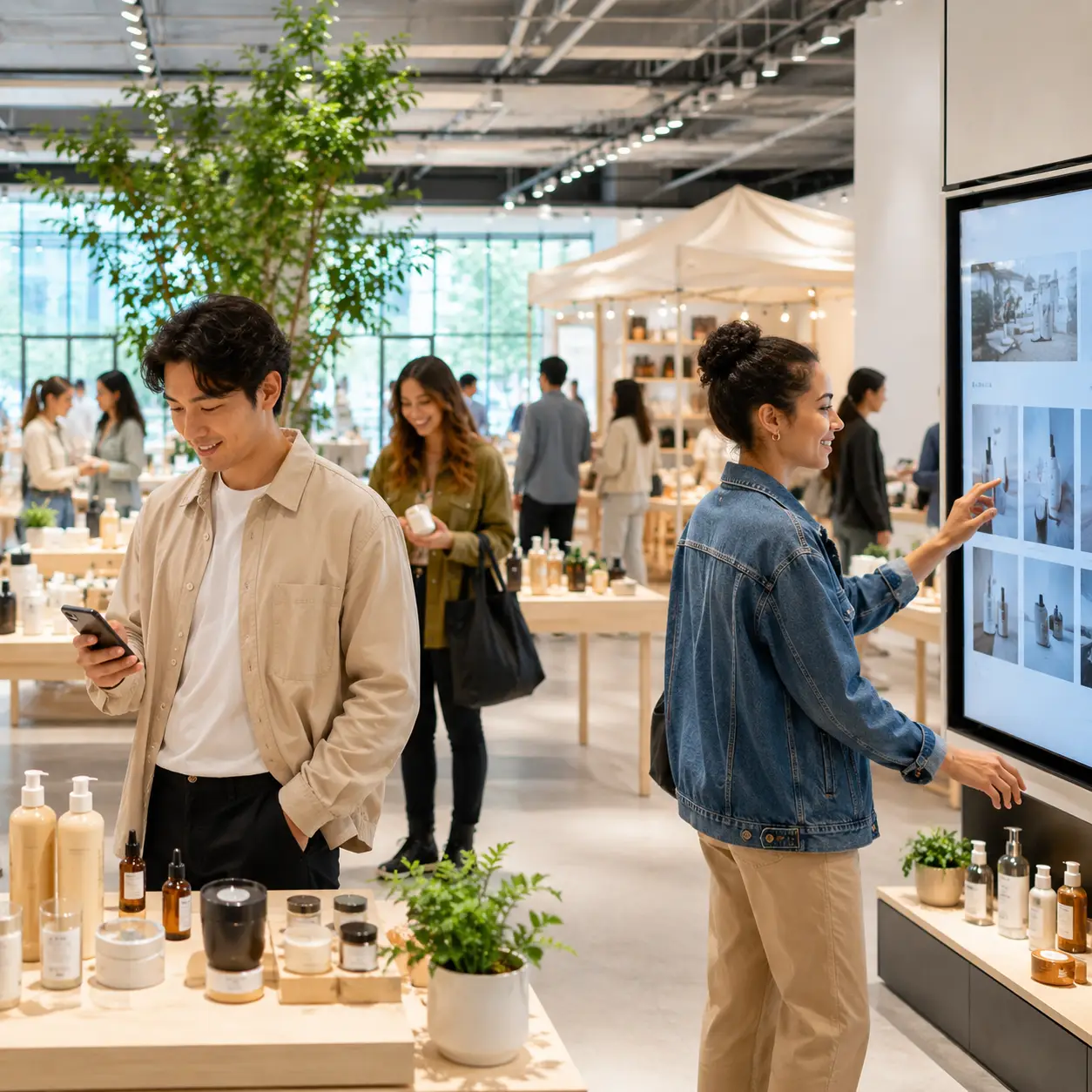
A strong store experience creates content before the marketing team has even opened Canva. Customers film shelves. Creators review products. Friends send photos. Shoppers share finds in group chats. A clever display lands on Instagram Stories. A pop-up becomes a TikTok location. A launch becomes a reason to visit.
Physical retail now fuels digital visibility.
That means retailers need to design stores with content behaviour in mind. What will people photograph? What will they send to a friend? What will creators want to film? What will make a shopper pause for five extra seconds?
Those five seconds matter. They are the bridge between foot traffic and social reach.
Gen Alpha shopping habits make this connection even clearer. The store is no longer only a place to buy. It is part of the content journey, the social proof and the brand experience.
Today’s customer journey might look like this:
A creator posts a product
A shopper saves it
A friend mentions seeing it in-store
The shopper visits
They film it
They buy it
They post it
Someone else discovers it
...and the loop starts again
That is the modern retail loop.
Gen Alpha shopping habits give retailers their next move
Gen Alpha shopping habits do not mean retailers need to rip out every shelf and start from scratch. They need to think more carefully about how different generations want to shop.
Gen Alpha wants discovery, social energy and tangible interaction. Gen Z wants speed, authenticity and shareability. Millennials want convenience with a reason to leave the house. Gen X wants clarity, quality and efficiency. Boomers want trust, service and ease.
What each generation wants from retail
| Generation | What they want |
|---|---|
| Gen Alpha | Discovery, social energy, tangible interaction |
| Gen Z | Speed, authenticity, shareability |
| Millennials | Convenience with a reason to leave the house |
| Gen X | Clarity, quality, efficiency |
| Boomers | Trust, service, ease |
The winning store does not chase one generation at the expense of another. It designs a smarter experience around shared human needs: space, clarity, freshness, usefulness and delight.
Start with the basics. Make the store easier to navigate. Train staff to add value beyond “Can I help you?” Rotate products in a way that creates curiosity. Use digital tools where they genuinely improve the experience. Connect social media campaigns to in-store moments. Give people a reason to visit now, then a reason to come back.
Gen Alpha shopping habits are a reminder that retail is not dying. Boring retail is.
The future belongs to stores that understand attention has changed. People still want to shop, browse, touch, test, compare and discover. They simply expect the physical experience to feel as considered as the digital one.
And for brands willing to rethink the journey, that is a very exciting place to play.
At RED Marketing, we help brands connect the dots between digital behaviour and real-world customer experience – from social strategy and content creation to website journeys, paid campaigns, brand storytelling and retail-led marketing.
RED Marketing
78 York St, London W1H 1DP, United Kingdom
Phone: +44 7874 160 831
Web: https://www.redmarketing.biz
FAQs
Why are Gen Alpha shoppers going back to physical stores?
Because physical retail offers social energy, instant discovery, sensory experience and the thrill of finding something in real life – things online shopping can’t fully replicate.
Do Gen Alpha shopping habits mean this generation is anti-digital?
No. Gen Alpha shopping habits combine online discovery, through TikTok, YouTube and creator recommendations, with offline experience. The store often completes a journey that starts on a screen.
What do Gen Alpha shoppers expect from a store?
They expect the store to feel as intuitive, visual and discovery-led as the digital platforms where they first found a product, with social energy and tangible interaction.
How are big retailers responding to Gen Alpha shopping habits?
Retailers such as Target and Walmart are investing in store remodels, updated technology and improved guest experience to meet changing customer expectations.
How can pop-up stores help attract Gen Alpha shoppers?
Rotating pop-up spaces create newness and urgency, giving shoppers a reason to return and generating talking points and content opportunities.
What is the "modern retail loop"?
It’s the cycle where a creator posts a product online, a shopper saves and visits the store, buys and shares the experience, prompting someone else to discover it – and the loop continues.