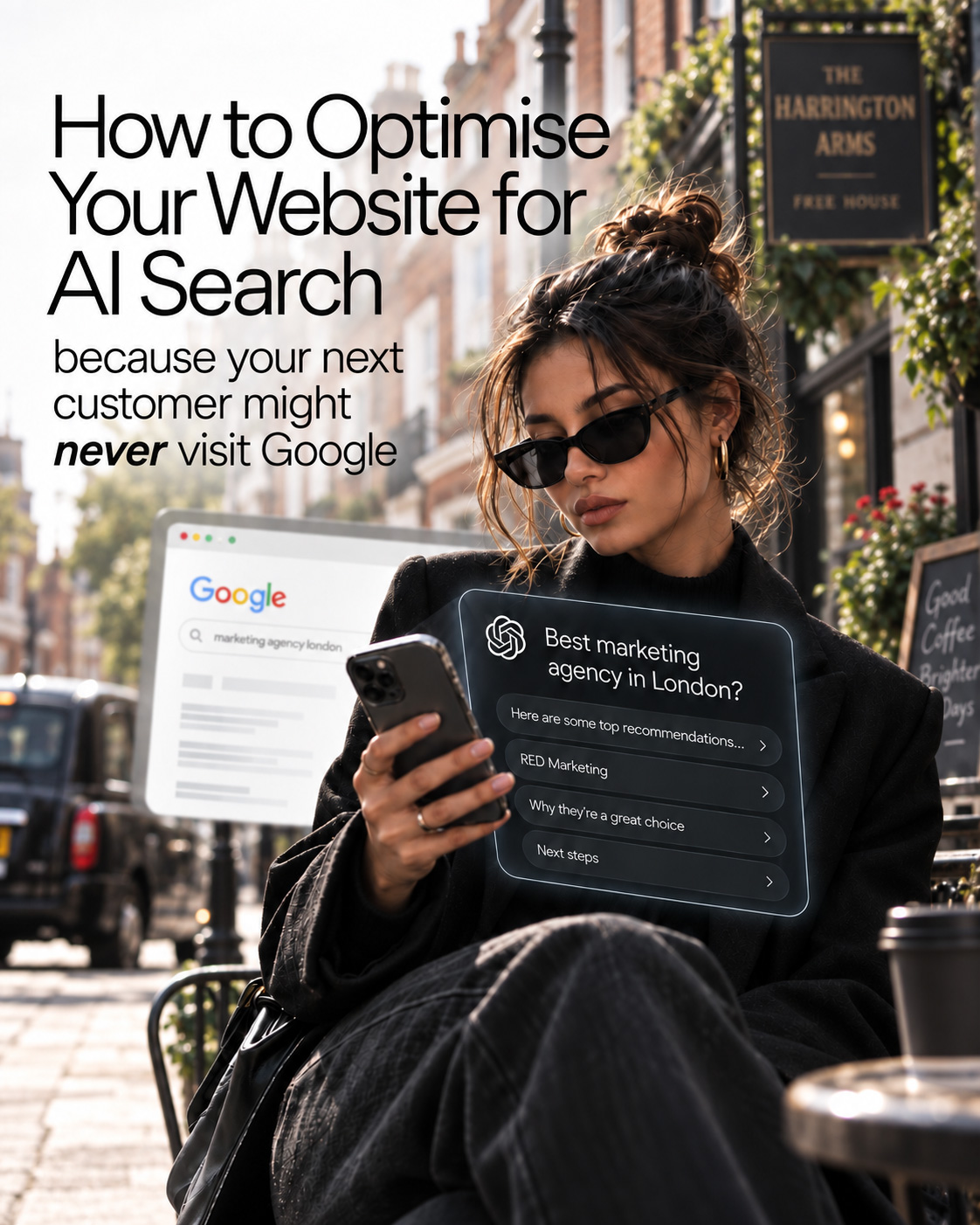
How to optimise your website for AI search – because your next customer might never visit Google
“How to optimise your website for AI search” might sound like another thing to add to your ever-growing marketing to-do list (because apparently that list wasn’t long enough already), but here’s something you’ll want to sit up and notice: your next customer might never visit Google.
Imagine someone in London looking for a new restaurant, private healthcare provider or wedding venue. Instead of opening Google, typing a search and working their way through page after page of results, they ask ChatGPT, Gemini or another AI platform: “Who should I choose?” Seconds later, they have recommendations, comparisons and suggestions right in front of them. And if your brand isn’t part of that answer, you could be completely off the shortlist before the customer even knows your name exists.
This is why how to optimise your website for AI search deserves a spot on your radar (yes, even if you already have SEO covered). The way people discover information online is changing as AI tools become part of everyday research and decision-making. The big question is no longer only “How do we rank on Google?” but “How do we become the brand AI trusts enough to recommend?”
Here’s the juicy bit: how to optimise your website for AI search doesn’t mean waving goodbye to everything you’ve already built and starting from scratch (cue the dramatic sigh of relief!). It means making sure your website content, structure and expertise are presented in a way that both people and AI systems can understand.
How to optimise your website for AI search: the difference between SEO and AI optimisation
SEO has spent years helping brands earn their place in Google search results. The focus has traditionally been on things like keywords, website structure, backlinks and creating content that answers what people are searching for. Simple enough, right? Well… enter AI search, the new player changing how people discover information online. Instead of scrolling through a list of links and deciding where to click, users can now ask AI platforms a question and receive a response that already brings together the information they need.
This is where how to optimise your website for AI search takes the conversation somewhere new. The goal isn’t only getting a page to appear in results – it’s helping AI understand your expertise, recognise your relevance and choose your brand as a useful recommendation. A London restaurant, for example, no longer only needs to think about appearing for “best restaurants in London”. It also needs to consider whether its website provides enough detail for an AI tool to confidently suggest it when someone asks for a restaurant recommendation based on location, cuisine, occasion or budget. How to optimise your website for AI search means creating content that gives AI the context it needs to understand why your brand deserves attention.
How to optimise your website for AI search: eight ways to become the brand AI recommends
Okay, so we know the rules of the game are changing. But what does this actually mean for your website? No dramatic website rebuilds, no panic buttons and definitely no throwing your SEO strategy out the window. The brands winning attention in AI search are focusing on the details that help platforms understand their expertise, recognise their relevance and confidently recommend them.
Here are eight practical ways to help your website become more visible in the world of AI-powered discovery.
- How to optimise your website for AI search by adding structured data
Schema markup gives search engines and AI platforms additional context about your website. It highlights important details such as your organisation, services, products, articles and frequently asked questions in a format machines can process. This helps AI systems understand exactly what information they are looking at instead of making assumptions.
What to do now: Add relevant schema types to key pages, including Article, FAQ, LocalBusiness and Product where appropriate. - How to optimise your website for AI search with content that answers real questions
AI tools are designed to respond to questions, so your website content needs to reflect how people naturally ask for information. A customer rarely thinks in keywords alone. They ask complete questions, explain their situation and look for helpful guidance. Content that provides direct answers, useful detail and genuine expertise has a better chance of being referenced.
What to do now: Review your website pages and rewrite sections around the questions your customers ask most often. - How to optimise your website for AI search through topical authority
AI systems look for evidence that a brand understands its subject area. Publishing one article about a topic is helpful, but creating a collection of connected resources shows deeper knowledge. This could include guides, supporting blogs, service pages and expert insights that link together naturally. Over time, this creates a richer picture of your expertise.
What to do now: Choose your key industry topics and create supporting content that answers different stages of your audience’s research journey. - How to optimise your website for AI search using conversational content
The way people search is becoming more conversational, especially with voice assistants and AI platforms. Website content should sound natural, informative and easy to follow. This doesn’t mean writing like a robot or forcing questions into every paragraph. It means understanding the language your customers use and reflecting their concerns, needs and decision-making process.
What to do now: Look at customer emails, reviews and sales questions to identify phrases your audience already uses. - How to optimise your website for AI search by keeping information updated
AI platforms prioritise information that appears trustworthy and current. Outdated service details, old statistics or missing publication dates can create uncertainty around your content. Regular updates show that your website remains active and that your information reflects the latest developments in your industry.
What to do now: Schedule regular content reviews to refresh important pages, update facts and remove outdated information. - How to optimise your website for AI search with smarter internal linking
Internal links help users and AI systems understand how different pages connect. When related content is linked together, it creates a clearer picture of your website’s subject areas and highlights which pages provide valuable information. Thoughtful linking also helps visitors discover more useful resources without needing to search around your site.
What to do now: Review your existing pages and add relevant links between related services, blogs and resources. - How to optimise your website for AI search beyond your own website
AI systems don’t only assess what you say about your brand. They also consider what other trusted sources say about you. Mentions on reputable websites, industry publications, directories and relevant platforms can contribute to your overall online credibility. This is where digital PR, partnerships and off-page SEO still play an important role.
What to do now: Look for opportunities to earn genuine mentions through industry features, expert commentary and partnerships. - How to optimise your website for AI search with technical foundations
Before AI can understand your content, it needs to access your website properly. Page speed, mobile performance, image optimisation, accessibility and technical SEO all influence how easily information can be discovered and processed. A website that performs well creates a better experience for visitors and gives AI systems fewer barriers to understanding your content.
What to do now: Check your website speed, compress large images, review accessibility and fix technical issues affecting performance.
How to optimise your website for AI search: the takeaway brands need to know
The internet has officially entered its “things are getting interesting” era. The brands that stand out in AI search won’t be the ones shouting the loudest – they’ll be the ones that have done the groundwork behind the scenes. Understanding how to optimise your website for AI search means giving AI platforms the information, context and expertise they need to recognise your brand when customers start asking questions.
The forward-thinking brands are already thinking beyond traditional rankings and looking at the bigger picture of digital discovery. If you’d like help understanding how to optimise your website for AI search or want to chat through where your current strategy fits into this new landscape, get in touch with us at info@redmarketing.biz. You can also explore more of our insights on AI content marketing mistakes, SEO copywriting and human copywriting vs AI copywriting to see how brands can use AI without losing the expertise, personality and human thinking that make them memorable.
RED Marketing
78 York St, London W1H 1DP, United Kingdom
Phone: +44 7874 160 831
Web: https://www.redmarketing.biz
Frequently asked questions
What should a UGC brief include?
A UGC brief should include the campaign objective, intended customer, core message, mandatory product information, content specifications, call to action, disclosure requirements and usage rights. It should also explain where the creator has freedom to use their own language and style.
Should brands provide UGC creators with scripts?
Scripts should generally be reserved for information that must be communicated exactly, such as regulated claims or legal wording. In other situations, talking points usually produce more natural content than word-for-word scripts.
How many benefits should a UGC video include?
Most short-form creator videos should concentrate on one principal problem or benefit. Additional messages can be tested through separate videos rather than compressed into one crowded piece of content.
Why does some UGC still feel like an advert?
UGC often feels like traditional advertising when it is overly scripted, excessively polished, heavily branded or disconnected from the creator’s normal way of speaking. The appearance may resemble organic content, but the delivery signals that it has been tightly controlled.